property
Molenbeek Attracts First-Time Buyers as Brussels Housing Prices Surge Elsewhere
The historic western district is drawing young buyers with lower entry costs and improving transport links, even as geopolitical jitters rattle global markets.
How we reported this
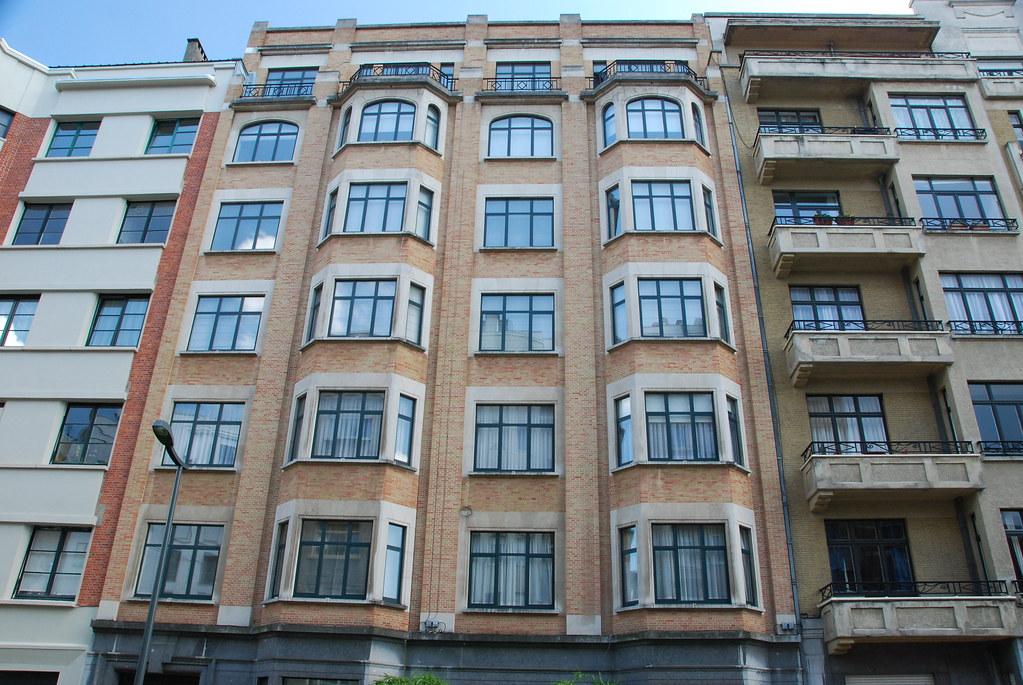
A quiet shift is underway in Brussels' residential market. First-home buyers, priced out of the city's more traditional postal codes, are increasingly turning their attention to Molenbeek-Saint-Jean, a district long overlooked but now showing signs of becoming an investment hotspot.
Real estate agents across the capital report a steady uptick in inquiries from under-35s looking at properties in the western municipality. The trend, they say, is driven by a simple arithmetic: average per-square-metre prices in Molenbeek remain roughly 30 to 40 percent below those in the European Quarter or central Ixelles, according to data from the Brussels-Capital Region's statistics office, which tracks notarial transactions.
The attraction is not just price. Molenbeek sits within the city's inner ring, steps from the Canal and a short metro ride from the city centre. The newly extended tram line 9, which now runs from the Gare de l'Ouest to the Simonis stop, has improved connectivity to the city's northern business districts. For first-time buyers who cannot afford a two-bedroom apartment in Saint-Gilles, where median prices have breached €300,000, Molenbeek offers a viable, if edgier, alternative.
Why Now?
This shift comes at a time of global uncertainty. On the same day the US launched fresh strikes in the Middle East, with the Strait of Hormuz closed by Iranian action, and a powerful typhoon forced the evacuation of nearly two million people in China, the idea of a tangible, roof-over-one's-head investment has gained renewed appeal.
Local notaries say they are processing an unusually high number of deeds for properties under €250,000 in postal codes 1080 and 1090, both covering large parts of Molenbeek. The buyers are overwhelmingly young, often self-employed or working in the tech and creative sectors. Many cite the area's evolving reputation: a web of co-working spaces, art galleries and pop-up eateries around the Canal, though none of these can yet compete with the density of services in the city's south.
Brussels' municipal housing authority notes that renovation premiums, available for owner-occupiers upgrading older homes, have been a deciding factor. One local agent, who asked not to be named because she lacks authorisation to speak to the press, said that nearly half her first-time buyer clients in 2025 ended up in Molenbeek, up from roughly one in ten just three years ago.
What the Data Shows, and What It Doesn't
No official price index for Molenbeek alone exists in the public domain, but the Brussels Real Estate Federation publishes a quarterly overview by neighbourhood cluster. The federation's most recent report, released in June 2026, groups Molenbeek with Koekelberg and Jette in a “western corridor” category. While the federation does not break down each municipality separately, it noted that the corridor recorded the highest proportion of sales to first-time buyers of any Brussels submarket in the first quarter of 2026.
The caveat is important: the district still carries a stigma for some. It was the focus of intense security scrutiny after the 2016 terrorist attacks, and parts of it remain among the most deprived in the region by median income. Schools, green spaces and even basic retail are unevenly distributed. First-home buyers who venture here must be prepared for a neighbourhood that is still in transition.
But for those willing to trade polish for potential, the arithmetic works. A typical one-bedroom flat in Molenbeek's central Quartier du Centre, near the church of Saint-Jean-Baptiste, can be had for €175,000 to €200,000. A comparable unit in the European Quarter would run upwards of €350,000. The difference, roughly €150,000, covers a full renovation plus a modest buffer for rising interest rates.
The practical advice from local agents and notaries is consistent: visit the suburb on foot at different times of day, check the proximity to tram and bus stops, and budget for renovation work if buying an older property. The city's urban renewal agency has earmarked several blocks around the Etangs Noirs metro station for renovation, but no timeline has been announced.
For now, Molenbeek remains a gamble, but one that an increasing number of first-time buyers in Brussels are willing to take.
This article is general information only and is not personal financial or investment advice. Consider your own circumstances and seek licensed professional advice before making financial decisions.