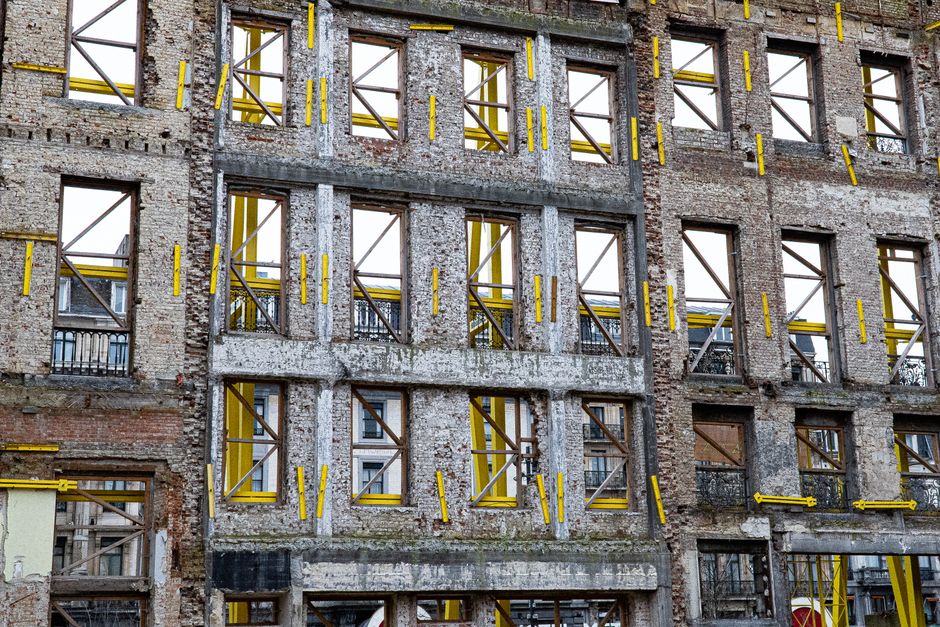
The Stade Roi Baudouin turned 30 years old this summer. That alone tells you something. Built for the 1996 European Athletics Championships, the 50,000-seat ground in Laeken has hosted Belgium's national football team, major rugby fixtures and the Memorial Van Damme athletics meeting for three decades — and it shows. Cracks in the lower tier concrete were flagged in a Brussels Capital Region structural audit completed in March 2026, and two sections of the east stand have been partially closed to spectators since April pending reinforcement work estimated at €14 million.
That audit has forced a conversation that Brussels sports administrators have been quietly avoiding for years. The city's flagship venues were largely built or last substantially upgraded in the run-up to Belgium's co-hosting of Euro 2000. A quarter-century of heavy use, changing safety standards and the structural demands of a changing climate have left the infrastructure gap harder to paper over. With the heatwave that killed more than 2,000 people in France last month providing a grim backdrop, questions about spectator safety, ventilation and shade at open-air grounds have moved from niche concern to urgent policy matter.
Club Level: Where the Real Pressure Is Building
The Stade Roi Baudouin gets the headlines, but the more acute problem lies one rung down the pyramid. RWDM, the Molenbeek-based club that returned to the Belgian First Division A in 2023, has been playing home matches at the Stade Edmond Machtens on Rue Charles Malis since winning promotion. Capacity is listed at 9,700 but effective safe attendance, after the Brussels fire and safety service imposed revised crowd-flow limits in January 2026, is closer to 7,400. The club finished sixth last season and is attracting larger crowds. There is simply not enough room.
Across the Canal Zone, Union Saint-Gilloise — who came within a handful of points of the Pro League title two years running — operates out of the Joseph Marien stadium in Forest, a ground that opened in 1919 and seats just 8,500. Union drew average home gates of 8,200 in the 2025-26 season. European nights under UEFA competition rules require minimum facilities the Marien cannot currently meet; the club has had to relocate those matches to Anderlecht's Lotto Park in Anderlecht, a workaround that costs the club an estimated €300,000 per European home fixture in ground hire and logistics.
Anderlecht itself completed a €45 million renovation of Lotto Park in phases between 2019 and 2023, replacing seats, upgrading media facilities and installing a new partial roof over the north stand. That project, partly financed through a public-private partnership with the Flemish investment vehicle PMV and Brussels Invest & Export, stands as the only major completed stadium project in the Greater Brussels area this decade.
What the Region Is Pledging — and When
The Brussels Capital Region government published its Sport Infrastructure Master Plan in February 2026, committing €220 million over six years to upgrade or replace facilities across 19 communes. Priority projects include a new athletics and multi-sport complex on the Plateau du Heysel, adjacent to the existing King Baudouin complex, and a covered synthetic-pitch hub in Schaerbeek intended to serve community clubs that currently pay between €80 and €140 per hour for outdoor pitch time in winter months.
The Heysel project is the centrepiece. Planned capacity for the new athletics arena is 15,000, with a retractable roof and eight air-conditioned changing facilities — a direct response to the heat and extreme weather conditions that disrupted training programmes across the city's athletic clubs during the summers of 2024 and 2025. Groundbreaking is scheduled for the first quarter of 2027, with completion targeted before the 2030 FIFA World Cup, for which Belgium and the Netherlands are joint hosts.
For clubs and community sport bodies watching the timeline, the practical advice from the Brussels Sport Administration office on Avenue des Arts is blunt: apply now. A €15 million community infrastructure fund attached to the Master Plan opened applications on 1 July, with a closing date of 30 September 2026. Smaller clubs — those running budgets under €500,000 annually — are eligible for grants covering up to 70 percent of eligible renovation costs. The money exists. The question, as it always is in this city, is whether the paperwork moves faster than the concrete crumbles.
This article was compiled by AI and screened before publishing. See our editorial standards.