Wellness
Gut health 101: fermented foods you can find locally
From Ixelles market stalls to specialist shops in Saint-Gilles, Brussels has more probiotic options than most residents realise.
4 min read
Updated 1 d ago
Wellness
From Ixelles market stalls to specialist shops in Saint-Gilles, Brussels has more probiotic options than most residents realise.
4 min read
Updated 1 d ago
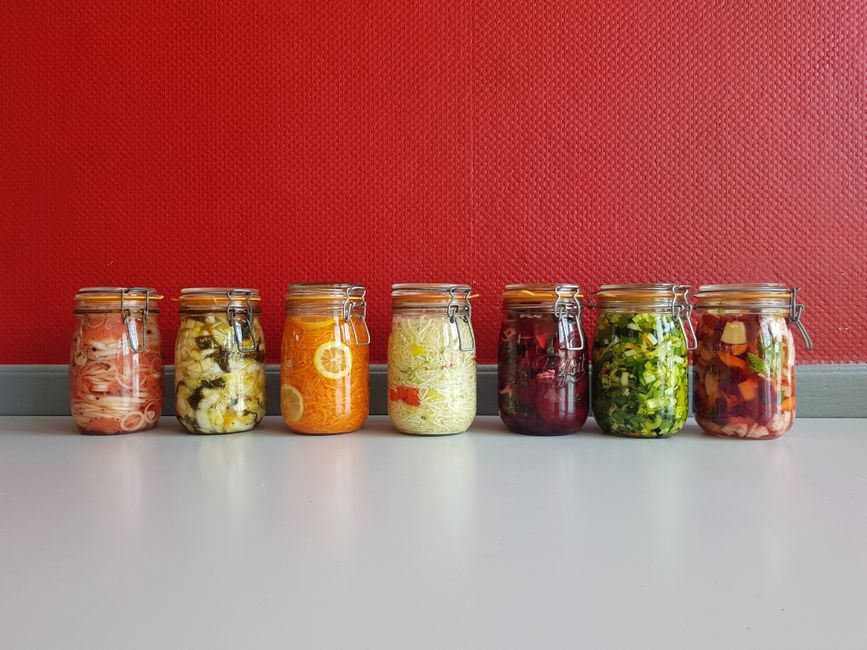
Sales of fermented foods at Brussels' weekend markets have climbed roughly 30 percent over the past two years, according to figures compiled by the Fédération des Marchés de Bruxelles earlier this spring. Vendors at the Marché du Midi report that kombucha, kefir and locally produced krauts now sit alongside the traditional charcuterie — and they sell out faster.
The timing is not accidental. A growing body of clinical research, including a landmark 2021 Stanford University study published in Cell that tracked 36 adults over 17 weeks, found that a diet high in fermented foods measurably increased microbiome diversity and reduced 19 markers of inflammation. That science has been filtering into mainstream consciousness ever since, and Brussels, with its unusually health-literate population and dense concentration of international residents, has proved a receptive audience. Gut health is no longer a niche conversation held in naturopath waiting rooms. It is front-of-shelf at the supermarché.
The easiest entry point for most residents is Rob Gourmet on Boulevard de la Woluwe in Woluwe-Saint-Lambert. The store carries at least a dozen live-culture products, including Belgian-made water kefir from a small producer in Liège and a rotating selection of raw, unpasteurised sauerkraut that retails at around €4.50 for 400 grams. Crucially, staff there can distinguish between products that actually contain live cultures and those that have been heat-treated — a distinction that matters enormously for gut benefit.
For a more neighbourhood feel, La Moisson on Chaussée de Forest in Saint-Gilles stocks organic miso paste sourced from a cooperative in the Ardennes, along with tempeh and a house-made kimchi that turns over fast enough to guarantee freshness. The shop also runs a monthly fermentation workshop — the next one is scheduled for 19 July 2026 — where participants learn to prepare their own lacto-fermented vegetables at home for a €25 entry fee. Spots go within days of opening.
Over in Ixelles, the Saturday market on Place Flagey regularly features a stall run by a collective called Ferment Bruxelles, which sells small-batch jun tea, beet kvass and a spiced carrot kraut. Prices run between €3 and €7 per jar. The collective also distributes a free bilingual (French/Dutch) leaflet explaining which fermented products require refrigeration and which do not — practical information that most supermarket labels omit entirely.
Understanding what you are buying matters. Not all fermented foods deliver the same benefit. Kombucha, for instance, varies wildly: mass-produced versions are often pasteurised after fermentation, killing the bacterial cultures that justify the health claims in the first place. The same goes for many commercial yogurts. The key phrase to look for on packaging is cultures vivantes or levende culturen — live cultures — which Belgian food labelling regulations require producers to display accurately.
Kefir, whether dairy or water-based, tends to contain the highest colony counts per serving of any widely available product, with some studies citing between one billion and ten billion colony-forming units per 250ml glass. Miso and tempeh deliver fermentation benefits through a different mechanism — enzymatic activity and isoflavones rather than probiotics per se — making them useful additions rather than direct substitutes. Eating a variety across the week is more effective than doubling down on a single product.
For residents new to fermented foods, gastroenterologists at UZ Brussel, the university hospital in Jette, generally recommend starting with small portions — a tablespoon of sauerkraut alongside a meal, or 100ml of kefir per day — and building up over two to three weeks to allow the gut to adjust without bloating. Anyone with inflammatory bowel disease or a compromised immune system should speak with their own doctor before making significant dietary changes. Self-diagnosis via wellness content, however well-intentioned, has limits that a consultation at your local médecin généraliste does not.
The July fermentation workshop at La Moisson takes bookings by email. The Place Flagey market runs every Saturday from 07:00 to 14:00. Rob Gourmet is open seven days. The infrastructure, in other words, is already there. Using it is the straightforward part.
Wellness
Wellness
Wellness
Wellness
About this article
Published by The Daily Brussels
Spread the word
Daily brief
Free, in your inbox before 7am. Weekdays.