Wellness
How to start a walking group in your neighbourhood
Brussels has the streets, the parks, and the appetite — here's what it actually takes to get neighbours moving together.
4 min read
Updated 1 d ago
Wellness
Brussels has the streets, the parks, and the appetite — here's what it actually takes to get neighbours moving together.
4 min read
Updated 1 d ago
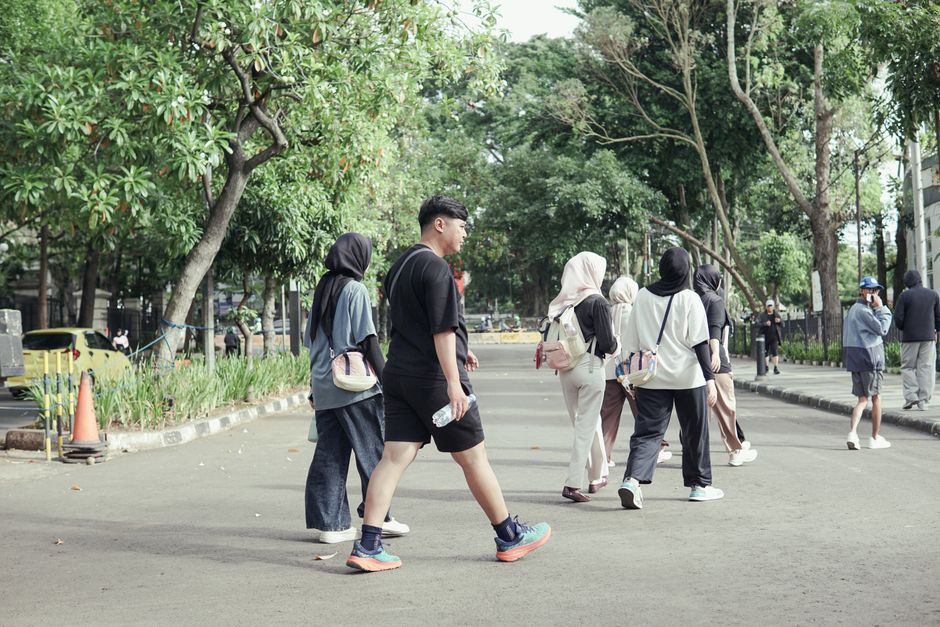
More than 40 walking groups now operate across the 19 communes of Brussels Capital Region, according to figures from Pro Velo and the Brussels Sports Administration — and organisers say the model is spreading faster in 2026 than at any point since the post-pandemic outdoor exercise boom of 2021. The barrier to entry is lower than most people think: a WhatsApp group, a fixed meeting point, and a Tuesday morning is often enough to get started.
The timing matters. Europe's urban health conversation has shifted sharply this year toward community-based prevention, with the World Health Organization's European office in Copenhagen reiterating in its May 2026 regional report that adults need at least 150 minutes of moderate aerobic activity per week — a target that roughly two-thirds of Belgian adults are still missing. Walking groups, the evidence consistently shows, outperform solo exercise regimes on one critical variable: people actually show up. Social accountability does what gym memberships rarely do.
The Bois de la Cambre in Ixelles is the city's most obvious starting point for a new group. The park's 123-hectare loop is flat enough for mixed fitness levels, well-lit for winter mornings, and served by tram lines 8 and 25 — meaning no one needs a car to attend. Several established groups already gather at the Chalet Robinson entrance on Sunday mornings; a new group simply needs a different time slot to carve out its own identity.
Schaerbeek and Saint-Gilles have seen the sharpest growth in informal fitness communities over the past 18 months, partly because both communes invested in improved pavement infrastructure along the Chaussée de Haecht and the Parvis de Saint-Gilles respectively. The Réseau Santé Schaerbeek, a local public health network, began connecting would-be group organisers with liability guidance and free first-aid awareness sessions in March 2025 — a model other communes are now watching closely. Contacting your local maison de quartier is the fastest route into that kind of institutional support.
Registration costs almost nothing. Brussels Communes do not require a permit for walking groups of fewer than 50 people using public green space, provided no commercial fee is charged to participants. If you want insurance coverage — sensible once your group exceeds 15 regular members — affiliation with the Ligue Francophone de Marche costs €12 per year per participant and covers liability during organised walks. The Ligue's secretariat on Rue de la Montagne can process applications within two weeks.
Pick one day, one time, one meeting point — and keep all three fixed for at least three months. Consistency builds habit. The Parc du Cinquantenaire in Etterbeek works well because it has four clearly signposted entrances, which solves the eternal problem of latecomers not knowing where to find the group. A laminated A4 sign cable-tied to a railing costs about €3 at any copy shop on Rue Neuve and saves ten minutes of confused text messages every week.
Distance matters less than pace. A 45-minute loop at a conversational pace — roughly 4.5 to 5 kilometres — is the sweet spot for a mixed community group. Anything longer deters older participants and parents with young children; anything shorter feels incomplete. Add 10 minutes of informal standing-around time at the end and you have the social glue that keeps people returning the following week.
Promote locally first. A post in a neighbourhood Facebook group or a flyer in the window of a local pharmacy on Avenue Louise will reach the right people faster than any city-wide social media campaign. The Buurtsport programme, run through the Brussels Sports Administration at the Atomium complex, also maintains a free listing for community sports initiatives — submitting details takes about 20 minutes online and puts your group in front of several thousand registered users.
One final practical note: carry a charged phone and share a basic walk plan with at least one other regular member before each outing. It is common sense, and it is the kind of thing that turns a casual stroll into something people trust enough to recommend to a friend. That word-of-mouth is how every durable walking group in this city eventually grows. As always, anyone with underlying health conditions should check with a GP or local specialist before starting a new exercise regime.
Wellness
Wellness
Wellness
Wellness
About this article
Published by The Daily Brussels
Spread the word
Daily brief
Free, in your inbox before 7am. Weekdays.