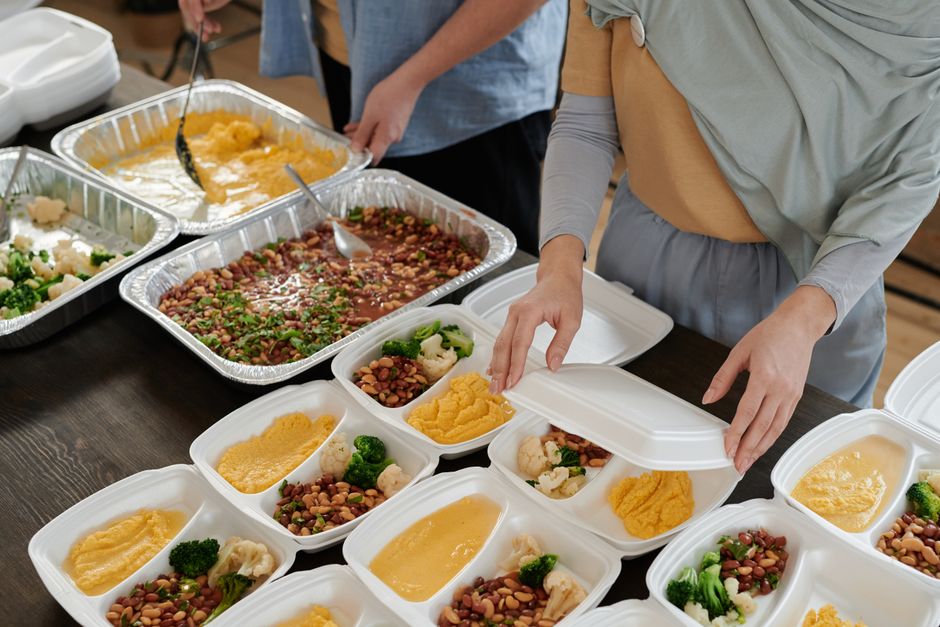
The average Belgian household now spends roughly €650 per month on food, according to Statbel's 2025 household budget survey — a figure that has climbed nearly 11 percent since 2022. That pressure, combined with the particular chaos of school holiday weeks and the creeping return of five-day office mandates, is pushing families across Brussels to rethink how they feed themselves. Meal prepping — the practice of cooking in deliberate, structured batches rather than scrambling each evening — has moved from niche fitness culture into something closer to survival strategy.
The shift is visible in the city's markets and kitchen-supply shops. On Saturday mornings at the Marché du Midi on Avenue Fonsny, stall holders report that customers are increasingly buying in bulk: whole heads of cabbage, five-kilo bags of dried chickpeas, flat trays of tomatoes priced at €3.50 rather than individual punnet portions. This is not austerity shopping. It is intentional cooking, planned a week in advance.
What Brussels Kitchens Are Actually Doing
The city's food education infrastructure has noticed. Mmmmh!, the Brussels-based food and sustainability platform with offices near Place Flagey in Ixelles, ran a series of weekend batch-cooking workshops throughout the spring, drawing participants from Schaerbeek to Uccle. Their model is simple: dedicate two to three hours on Sunday to produce five to seven base components — roasted vegetables, a legume, a cooked grain, a sauce — that can be recombined across the week into distinct meals. Pasta on Monday becomes a grain bowl on Wednesday and a stuffed pepper on Thursday. Nothing new, but the discipline around it is sharper than it was five years ago.
The Foodsavers Brussels cooperative, operating from a logistics hub in Anderlecht, has built a parallel model aimed at working parents specifically. Members receive weekly surplus-food boxes — priced at €12 for a family box — and are coached, via a short accompanying card, on how to sequence those ingredients across four or five meals. The cooperative estimates it diverts around eight tonnes of edible food from waste streams every month, and its waiting list has been open since February.
Nutritionists affiliated with the CHU Saint-Pierre hospital on Rue Haute recommend a structure that busy households can actually maintain. The principle: cook once, eat three ways. A large pot of slow-cooked lentils on Sunday covers a weeknight soup, a quick Friday-lunch wrap, and a protein base for a Saturday salad. The cognitive load drops sharply when the decision about what to eat has already been made — and made when you are not hungry and rushing.
The Practical Numbers Behind the Strategy
Cost comparisons are stark. A home-prepped weekday lunch — built from batch-cooked grains and roasted vegetables — runs to roughly €2.80 per portion at current Brussels market prices. The equivalent purchased at one of the city's ubiquitous sandwich chains near Rue Neuve runs between €8 and €11. For a household of four adults and children eating five weekday lunches each, the monthly differential is over €400. That is not a small number in a year when energy bills and rent have absorbed most discretionary income.
Protein is the sticking point for most families new to batch cooking. The instinct is to default to chicken breast, pre-portioned and grilled in bulk. Dietitians working through the BruCare community health network in Molenbeek advise broadening that base: hard-boiled eggs (six at a time, stored in the shell, lasting up to a week in the fridge), canned sardines from Delhaize at roughly €1.20 a tin, and dried lentils at under €2 a kilo — all of which hold well and integrate into multiple formats without becoming monotonous.
The practical start point for anyone new to the habit is modest. Pick three base ingredients this weekend. Roast a tray of whatever vegetables are cheapest at your nearest market — try the Marché de la Bascule in Etterbeek on Sunday mornings. Cook a pot of brown rice or farro. Hard-boil some eggs. Label everything with masking tape and a date. By Thursday, when the week has gone sideways and energy is gone, those containers are what stand between a nutritious plate and a delivery app. That, more than any elaborate system, is where it starts.