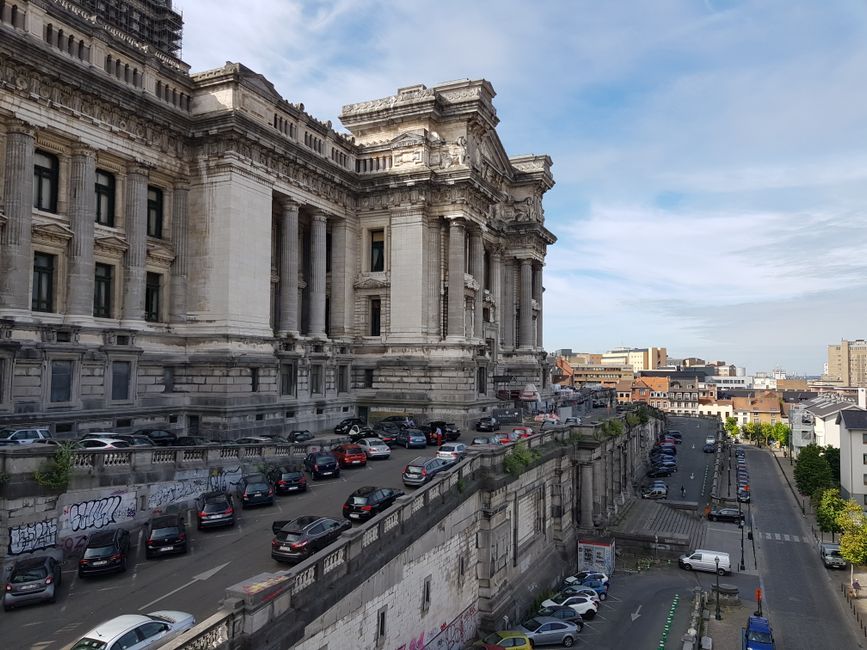
Brussels urban authorities are confronting a practical and political headache this summer: what to do with dozens of duplicate images — photographs, murals, commemorative panels and reproduced artworks — spread across the city's public spaces, many of them installed without coordinated oversight during a decade-long wave of district-level cultural spending. The question now is not whether they need replacing, but who decides, who pays, and what comes next.
The issue gained traction inside the Brussels-Capital Region's urban planning directorate earlier this year after an internal audit of public art installations — commissioned through Urban.Brussels, the regional agency responsible for heritage and public space — flagged a growing inventory problem. Multiple identical or near-identical photographic reproductions had been installed in separate districts, sometimes just streets apart, with no cross-referencing between municipal contracts. The result: public money spent twice, sometimes three times, on the same image.
Where the Problem Is Most Visible
The duplication is clearest in two areas. Along the Rue Haute in the Marolles neighbourhood, a series of black-and-white archival photographs of 20th-century market life — installed as part of a 2021 neighbourhood heritage initiative run through the commune of Ville de Bruxelles — appear again, in slightly different formats, on panels near the Place du Jeu de Balle flea market less than 400 metres away. A similar pattern has emerged in Molenbeek-Saint-Jean, where commemorative portrait imagery installed along the Canal Zone waterfront overlaps with material commissioned separately by the commune's cultural department for the Rue de Birmingham arts corridor.
Urban.Brussels has not publicly confirmed the full scale of the audit findings, and the agency declined to provide a specific figure for the number of affected installations when contacted this week. However, a regional council document circulated in June 2026 and reviewed by The Daily Brussels references at least 34 individual public image installations across six communes flagged for review before the end of the third quarter of this year.
Cost is the most contested variable. Replacing a single outdoor commemorative panel in Brussels — including design, fabrication, weather-proofing and installation — typically runs between €4,500 and €9,000 depending on size and material, based on procurement records from comparable projects managed by the Schaerbeek commune between 2023 and 2025. Multiply that across three dozen installations and the bill climbs well past €200,000, before any new commissioning costs for original replacement artwork.
The Decisions That Will Define the Outcome
Three choices now sit on the table, and administrators cannot avoid them much longer. First, the Region must decide whether replacement is coordinated centrally through Urban.Brussels or left to individual communes — the latter approach is faster but risks reproducing the same fragmented commissioning that created the problem. Second, officials must determine whether duplicated images are simply removed, replaced with original site-specific commissions, or substituted with temporary community-produced work while longer procurement processes run their course. Third, and most politically sensitive, is the question of artist rights: several of the original photographers whose work was reproduced without full licensing agreements are based in Brussels, and at least two have signalled — through their representatives at the Union Professionnelle des Arts Plastiques — that they expect to be consulted and compensated before any replacement decisions are finalised.
Urban.Brussels is expected to present a framework recommendation to the regional government before September 30, 2026. Communes with installations flagged in the audit have been asked to submit their own preferred approaches by mid-August. That timeline is tight given the summer recess, and community arts organisations operating in Molenbeek and Ixelles have already begun pressing their respective commune administrations for transparency on what replaces what, and why.
For residents and local cultural groups, the practical advice is straightforward: attend commune council meetings in late August, where the replacement frameworks are likely to surface for the first time in public session. The Ville de Bruxelles holds its next urban affairs committee meeting on August 26, 2026. That is probably the earliest moment at which anyone outside the administration will get a clear picture of how this gets resolved — and who foots the bill.