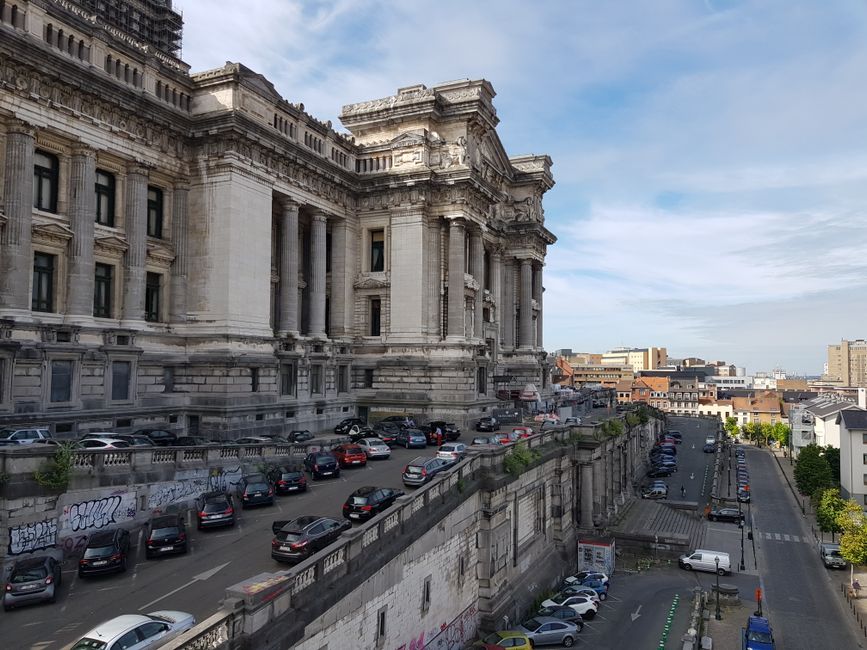
Brussels has a duplicate image problem, and fixing it will cost both money and political capital. The city's department responsible for digital communications and urban branding confirmed this spring that its shared media library — used by borough administrations, Visit Brussels, and several inter-communal agencies — contains an estimated 40,000 image files, of which preliminary checks suggest roughly a third are duplicates, near-duplicates, or outdated versions of the same shot. The clean-up, officially flagged as a priority in the 2026 municipal digital transformation programme, is now entering the phase where real decisions have to be made.
The timing is not accidental. Brussels has been investing steadily in its digital public infrastructure since the 2021-2026 coalition agreement committed the Region to a unified open-data architecture. Managing redundant visual assets across 19 communes — each with its own communications office, its own storage contracts, and its own preferences — has become a genuine operational headache, slowing down campaigns from the tourism board on the Rue Royale to renovation announcements out of Molenbeek's local government offices. Every duplicated file also carries a licensing tail: when an image exists in four slightly different versions across four different servers, it is not always clear which version carries the original rights clearance.
What the Audit Is Actually Deciding
The core question is not technical — the software to detect near-duplicate images is mature and relatively cheap to license. The question is governance. Urban.Brussels, the planning and heritage agency headquartered on Rue d'Arlon, and Innoviris, the Region's research and innovation funding body, are both cited in internal working documents as stakeholders whose image collections need to be folded into any unified system. Neither organisation uses the same content management platform. Getting them to migrate — or even to share metadata standards — requires a political agreement, not just an IT rollout.
Visit Brussels, which maintains its own photographic archive of landmarks including the Grand Place, the Atomium site in Laeken, and the Art Nouveau stock along Avenue Louise, has historically guarded its image library closely, partly for commercial licensing reasons. Any merged system will have to accommodate tiered access: free use for city communications, paid licensing for commercial partners, and restricted access for images still under photographer copyright. Drafting those tiers is the job of a working group that was supposed to deliver a framework by June 30, 2026. That deadline slipped.
The Decisions That Cannot Wait Much Longer
Three choices are now urgent. First, the Region must settle on a single deduplication tool from the shortlist currently under technical review — a process that has been running since February. Second, it must decide which organisation becomes the authoritative host of the master archive: a genuinely contested question given that Visit Brussels, Urban.Brussels, and the Chancellor of the Brussels-Capital Region's digital team all have reasonable claims. Third, and most politically sensitive, it must determine what happens to images that are duplicated across commune and Region level: if Ixelles and the Region both hold their own copies of a photograph of Place Flagey, which copy is canonical, and what happens to the other?
On cost, the 2026 digital transformation budget allocated approximately €2.3 million to the broader urban data infrastructure project, of which image archive rationalisation is one component. Industry benchmarks for municipal archive deduplication projects of comparable scale — Amsterdam completed a similar exercise across its city communications departments in 2023 — suggest the work, including migration and staff retraining, typically runs between €400,000 and €700,000 depending on the number of legacy systems involved. Brussels officials have not yet published a specific line-item figure for this piece of work.
The working group is expected to reconvene before the end of July, with a revised framework due before the summer recess ends in late August. If that document clears the inter-cabinet process, a public tender for the deduplication platform could go out in September. Borough communications officers have been told informally to avoid adding major new image batches to shared drives until the new standards are confirmed — a temporary freeze that is already causing friction for teams planning autumn cultural season promotions. The window for getting this right, before the next round of city-wide campaigns begins, is closing.