Brussels Urban Planning has confirmed that an audit completed in June identified more than 340 instances of duplicate public imagery across the city's 19 communes — from repeated wayfinding panels along the Rue de la Loi corridor to doubled-up heritage plaques in the Sablon district. The problem, known in urban management circles as duplicate image proliferation, costs municipalities money in maintenance, confuses tourists and degrades the visual coherence of public space.
The timing matters. Brussels is 18 months out from hosting a cluster of major European institutional summits, and city administrators at the Région de Bruxelles-Capitale have been under pressure since early 2025 to tighten the presentation of public thoroughfares. The audit was commissioned partly in response to complaints from the European Quarter residents' association and partly from internal pressure within Brussels Mobilité, the agency responsible for street furniture and signage standards. At the same time, comparable cities — Amsterdam, Vienna and Copenhagen — have each concluded similar reviews in recent years, giving Brussels a clear set of benchmarks to measure itself against.
What the Audit Found on the Ground
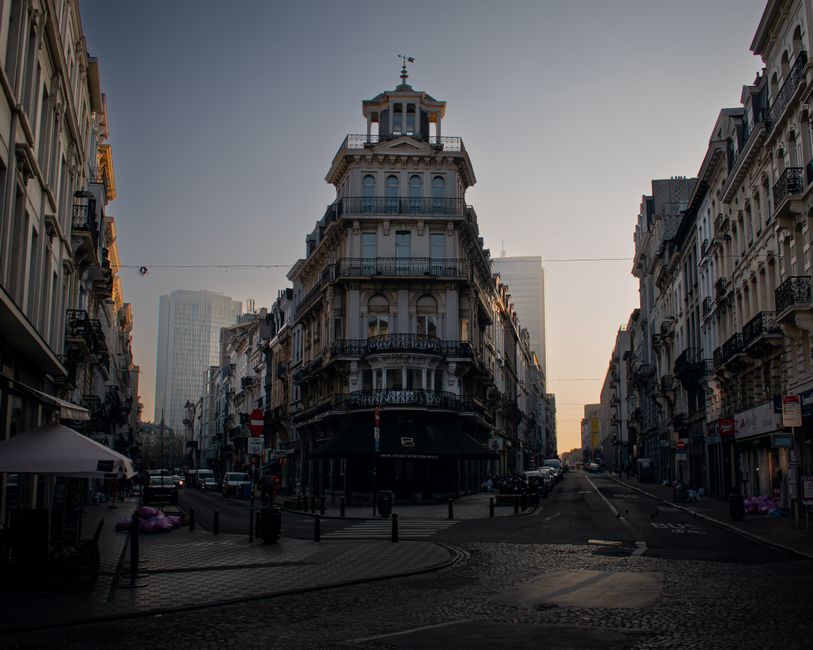
The worst-affected areas, according to the June audit summary circulated to commune officials, are Place Flagey in Ixelles and the pedestrian zone around the Grand-Place, where overlapping tourism boards, multilingual direction signs and separately commissioned public art installations have accumulated over decades without a coordinated removal policy. In the Marolles neighbourhood, at least 11 murals were flagged as thematic duplicates — works commissioned by different bodies that depict near-identical subjects within a 400-metre radius.
Brussels Mobilité operates under a 2019 framework directive that theoretically requires any new piece of street signage to be cross-checked against existing installations within a 200-metre radius before approval. In practice, that check has been applied inconsistently. The June audit found that the directive had been followed in full in only about 60 percent of sign installations logged between 2021 and 2025. The remaining cases either predated the directive or slipped through approval gaps when multiple agencies — including Visit Brussels and the commune-level cultural offices — commissioned work independently.
Amsterdam completed a comparable city-wide duplicate signage review in 2023 under its Openbare Ruimte programme, removing roughly 1,200 redundant signs across the canal ring and Jordaan district over 14 months. Copenhagen's equivalent exercise, finished in late 2024, reduced duplicate wayfinding installations in Nørrebro and the city centre by an estimated 28 percent. Vienna has taken a slower, neighbourhood-by-neighbourhood approach through its Stadtbild programme, prioritising the first district and the Naschmarkt area. Brussels, by those measures, is working from a smaller baseline of identified duplicates but has no completed removal schedule yet.
What Comes Next for Residents and Businesses
Brussels Urban Planning has indicated that a phased removal and consolidation plan will be presented to the regional parliament before the end of September 2026. The first phase is expected to focus on the European Quarter and the Pentagone — the historic core bounded by the inner ring road — where visual consistency matters most for institutional visitors. Businesses along Rue Antoine Dansaert and in the Place du Châtelain market zone have been told to expect consultations in the autumn about any commercial signage that overlaps with public installations.
The practical advice for residents and local organisations is to contact Brussels Urban Planning's Cellule Espace Public if they spot signage that appears duplicated or contradicts nearby panels — the agency opened a dedicated reporting portal in March 2026. Community groups affiliated with the Réseau des Quartiers, which covers neighbourhood associations across the 19 communes, have already been briefed on the process and can act as intermediaries for residents who are unsure whether a given installation falls under regional or commune jurisdiction.
Getting the pace right will matter. If Brussels completes its removal programme before the 2028 summit cycle begins, it will have moved faster than Vienna but still trail Amsterdam and Copenhagen. That gap is manageable — provided the September deadline for a parliamentary plan actually holds.